

Core precept 2: Prediction markets’ rising primary argument. By Joshua Kirschner
Over the previous few years, prediction markets have turn out to be a flashpoint in U.S. monetary regulation. Actually, in its March 16, 2026 Advance Discover of Proposed Rulemaking, the CFTC notes that “From 2006-2020, DCMs listed for buying and selling a median of roughly 5 occasion contracts per yr.
In 2021, this quantity elevated to 131, and the variety of newly-listed occasion contracts per yr remained at an analogous stage till 2025, when DCMs licensed roughly 1,600 occasion contracts for itemizing for buying and selling.” Prediction Markets, 90 Fed. Reg. 50, 12517 at n. 9 (proposed Mar. 16, 2026). Based mostly on a fast browse of the CFTC web site stock of all self-certified and authorized occasion contracts, a majority of those contracts are based mostly on “climate occasions, political occasions, worldwide occasions, scientific and cultural occasions, present occasions, and sporting occasions. Id.
As prediction platforms proceed to listing occasion contracts on political elections, sports activities outcomes, and different actual‑world occasions, federal and state regulators have grappled with find out how to outline the boundaries of what counts as a commodity, a futures contract, and even playing.
Within the midst of this uncertainty, regulators and prediction market platforms alike have raced to file go well with in a number of key states, in hopes of making favorable precedent. For prediction market platforms, one regulatory provision has unexpectedly emerged because the centerpiece of this struggle: Core Precept 2, the Commodity Futures Buying and selling Fee’s (“CFTC”) rule governing market entry for designated contract markets (“DCM”). See 17 CFR § 38.151; see additionally Prediction Markets, 90 Fed. Reg. 50, 12518 at Part II(A)(2)(a)-(b) (proposed Mar. 16, 2026)
This text proceeds in three components. First, it outlines the federal and state regulatory panorama during which prediction markets function and the enforcement actions they presently face. Second, it examines the origins and growth of the CFTC’s Core Precept 2. Third, it analyzes how federal and state courts have addressed arguments grounded in Core Precept 2 and considers the potential implications of its acceptance or rejection.
Federal and State Regulator Panorama
Regulatory scrutiny of prediction markets has elevated lately at each the state and federal ranges by way of a sequence of enforcement actions. As of the date of this text, the next states have energetic litigation involving futures contracts: Alabama, Arizona, California, Connecticut, Georgia, Illinois, Kentucky, Maryland, Massachusetts, Michigan, Minnesota, New Jersey, New York, Nevada, Ohio, South Carolina, Tennessee, Wisconsin. See Mick Bransfield, Abstract of Authorized Actions Involving Occasion Contracts, https://mickbransfield.com/2025/08/11/summary-of-legal-actions-involving-kalshis-sports-event-contracts/ (final up to date Mar. 17, 2026). In a number of states it has been a race to file go well with, starting with state regulators and/or non-public people being the primary to file a lawsuit in opposition to the prediction market platforms themselves. See, e.g., Class Motion Criticism, Christopher Jennings v. Kalshi Inc., et al., Dkt. No. 2:26-cv-00071 (D. Ala. 2026); Class Motion Criticism Kamana Keohohou, et al. v. Northern American Derivatives Alternate, Inc. d/b/a Crypto.com, et al., Dkt. No. 1:26-cv-20996 (D. Fla. 2026); Criticism for Everlasting Injunction and Declaratory Reduction, State of Nevada ex rel.
Picture: Joshua L. Kirschner is an affiliate at Nelson Mullins Riley & Scarborough LLP. Based mostly in Atlanta, Joshua focuses his apply on the gaming and playing sectors and represents companies and people in all kinds of regulatory and white-collar litigation issues.
Nevada Gaming Management Board v. Blockratize, Inc. d/b/a Polymarket, et al., Dkt. No. 3:26-cv-00089 (D. Nev. 2026). In a lot of these lawsuits, prediction market platforms are alleged to be engaged in unlawful playing by way of providing a futures market in a specific state and, thus, in violation of a specific state’s sports activities playing legal guidelines. See id.
In different states, prediction market platforms have initiated the lawsuit on the heels of regulators first issuing stop‑and‑desist letters from the state’s gaming enforcement authority, alleging violations of state sports activities‑wagering legal guidelines and directing platforms to halt operations inside the state. See, e.g., Criticism for Everlasting Injunction and Declaratory Reduction, KalshiEX LLC v. William Orgel, et al., Dkt. No. 3:26-cv-00034 (D. Tenn. 2026) (alleging violation of Tenn. Code Ann. §§ 4-49-101 et seq.); Criticism for Everlasting Injunction and Declaratory Reduction, KalshiEX LLC v. Schuler, et al., Dkt. No. 2:25-cv-01165 (D. Ohio 2025) (alleging violation of R.C. Chapters 2915, 3767, 3775 and all comparable guidelines); Criticism for Everlasting Injunction and Declaratory Reduction, KalshiEX LLC v. John A. Martin, et al., Dkt. No. 25-cv-1283 (D. Md. 2025) (alleging violation of Crim. Legislation Titles 12 and 13, SG §§ 9-lE-01, 9-lE-03, 9-lE-04, 9-lE-12, COMAR 36.10.01.02B and 36.10.14.01, Enterprise Regulation § 14-113 and all comparable guidelines); Criticism for Everlasting Injunction and Declaratory Reduction, KalshiEX LLC v. Mary Jo Flaherty, et al., Dkt. No. 1:25-cv-14723 (D. N.J. 2025) (alleging violation of N.J.S.A. § 5:12A-11, N.J. Const. artwork. IV, § 7, ¶ 2(D) and all comparable guidelines); Criticism for Everlasting Injunction and Declaratory Reduction, KalshiEX LLC v. Kirk D. Hendrick, et al., Dkt No. 2:25-cv-00575 (D. Nev. 2025) (alleging violation of NRS 463.0193, 463.01962, 463.160, 463.245, 463.360, 465.086, 465.092, 293.830, Nevada Gaming Regulation 22.1205(3) and all comparable guidelines).
Nonetheless, some prediction market platforms have merely filed go well with preemptively. See, e.g., Criticism for Injunctive Reduction, KalshiEX LLC v. Robert Williams, et al., Dkt. No. 1:25-cv-08846 (D. N.Y. 2025) (submitting go well with after the New York State Gaming Fee threatened civil penalties and fines if Kalshi continued to supply sure futures contracts inside New York); Criticism for Declaratory Judgment and Injunctive Reduction, Coinbase Monetary Markets, Inc. v. Dana Nessel, et al., Dkt. No. 4:25-cv-14092 (D. Mich. 2025) (submitting go well with previous to providing event-contract buying and selling to customers in Michigan).
In response, prediction markets have usually continued to function and filed a lawsuit in search of each injunctive reduction and a declaratory judgment allowing them to provide a lot of these futures contracts. See, e.g., Criticism for Everlasting Injunction and Declaratory Reduction, KalshiEX LLC v. William Orgel, et al., Dkt. No. 3:26-cv-00034 (D. Tenn. 2026) (alleging violation of Tenn. Code Ann. §§ 4-49-101 et seq.); Criticism for Everlasting Injunction and Declaratory Reduction, KalshiEX LLC v. Schuler, et al., Dkt. No. 2:25-cv-01165 (D. Ohio 2025) (alleging violation of R.C. Chapters 2915, 3767, 3775 and all comparable guidelines); Criticism for Everlasting Injunction and Declaratory Reduction, KalshiEX LLC v. John A. Martin, et al.,Dkt. No. 25-cv-1283 (D. Md. 2025) (alleging violation of Crim. Legislation Titles 12 and 13, SG §§ 9-lE-01, 9-lE-03, 9-lE-04, 9-lE-12, COMAR 36.10.01.02B and 36.10.14.01, Enterprise Regulation § 14-113 and all comparable guidelines); Criticism for Everlasting Injunction and Declaratory Reduction, KalshiEX LLC v. Mary Jo Flaherty, et al., Dkt. No. 1:25-cv-14723 (D. N.J. 2025) (alleging violation of N.J.S.A. § 5:12A-11, N.J. Const. artwork. IV, § 7, ¶ 2(D) and all comparable guidelines); Criticism for Everlasting Injunction and Declaratory Reduction, KalshiEX LLC v. Kirk D. Hendrick, et al., Dkt No. 2:25-cv-00575 (D. Nev. 2025) (alleging violation of NRS 463.0193, 463.01962, 463.160, 463.245, 463.360, 465.086, 465.092, 293.830, Nevada Gaming Regulation 22.1205(3) and all comparable guidelines). As soon as the lawsuit has been filed by the prediction market platform, they routinely search a preliminary injunction and/or momentary restraining order in opposition to the state company that despatched the cease-and-desist letter to keep up the power to supply contracts in the course of the litigation. See, e.g., KalshiEX LLC v. Mary Jo Flaherty, et al., Dkt. No. 25-1922 (third Cir. 2025); KalshiEX LLC v. John A. Martin, et al., Dkt. No. 25-1892 (4th Cir. 2025). Whereas many of those circumstances are nonetheless energetic, these during which the courtroom has already determined the prediction market platform’s preliminary injunction have shortly led to an attraction. See, e.g., Plaintiff’s Discover of Enchantment, KalshiEX LLC v. John A. Martin, et al., Dkt. No. 25-cv-1283 (D. Md. 2025) (interesting denial of Kalshi’s movement for preliminary injunction to the Fourth Circuit); Discover of Enchantment to the U.S. Court docket of Appeals for the Third Circuit, KalshiEX LLC v. Mary Jo Flaherty, et al., Dkt. No. 25-cv-02152 (D. N.J. 2025) (interesting grant of Kalshi’s movement for preliminary injunction to the Third Circuit).
No matter who initiates the lawsuit, the idea of the prediction market platforms is basically the identical: the state mustn’t and can’t implement its state-specific playing legal guidelines when prediction markets are solely topic to CFTC oversight.
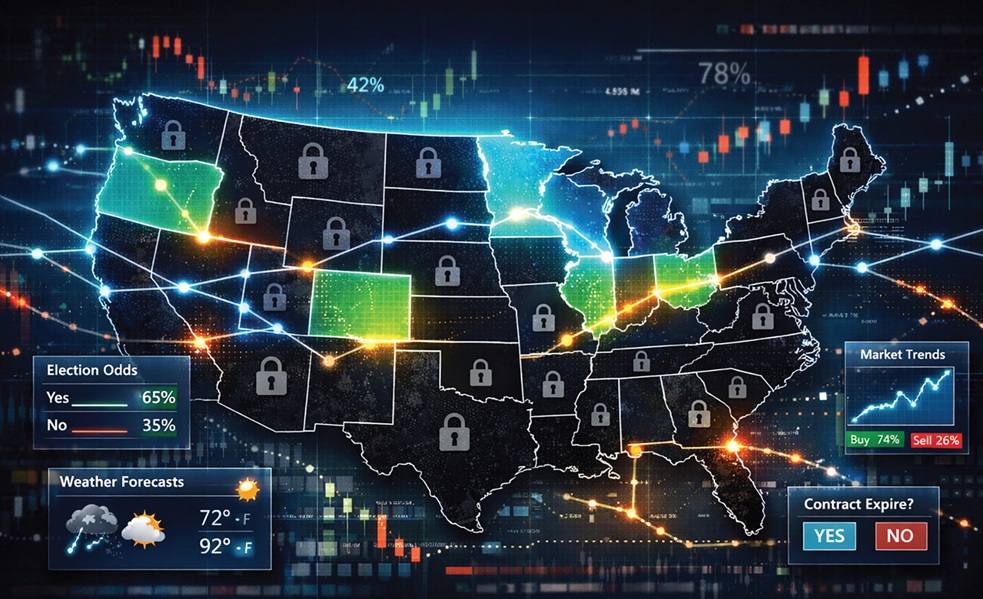
The Origin and Improvement of the CFTC’s Core Precept 2
In 1974, Congress established the CFTC as an impartial federal company and charged it with administering and imposing the Commodity Alternate Act (“CEA”). 7 U.S.C. §§ 1-26. Since then, the CFTC has overseen U.S. derivatives markets with a mandate to advertise market integrity, mitigate systemic threat, and shield prospects. To fulfill these aims, the company requires registered exchanges to keep up strong surveillance programs, implement compliance and reporting protocols, and implement guidelines designed to stop manipulation and abusive buying and selling practices.A central element of the CFTC’s regulatory authority is its energy to find out whether or not a buying and selling platform qualifies as a DCM. Platforms in search of DCM standing should submit apply with the CFTC and reveal that they fulfill an in depth set of statutory and regulatory standards. The best way to Turn into a Designated Contract Market,
https://www.cftc.gov/IndustryOversight/TradingOrganizations/DCMs/dcmhowto.html. As soon as designated, DCMs function underneath steady CFTC oversight and are permitted to listing futures and choices contracts on a variety of topics, supplied the contracts adjust to the CEA and CFTC rules.
An illustrative instance got here in November 2020, when the CFTC granted Kalshi full DCM standing. CFTC Designates KalshiEX LLC as a Contract Market, (Nov. 4, 2020), https://www.cftc.gov/PressRoom/PressReleases/8302-20. This designation licensed Kalshi to function underneath the identical regulatory framework that governs conventional futures exchanges, subjecting it to the total suite of compliance, reporting, and market‑integrity obligations relevant to all DCMs.
To make sure constant regulatory requirements, the CFTC promulgated 23 Core Rules that each DCM should fulfill as a situation of sustaining its designation. These rules collectively set up necessities associated to market integrity, monetary safeguards, disclosure practices, surveillance capabilities, and protections in opposition to manipulation. John O’Connell, Prediction Markets Discover Their Regulatory Footing, However the Boundaries Stay Clear, WEALTH MANAGEMENT (Dec. 15, 2025), https://www.wealthmanagement.com/advisor-support-platforms/prediction-markets-find-their-regulatory-footing-but-the-boundaries-remain-clear.
Amongst these, Core Precept 2 has turn out to be notably vital. It requires {that a} DCM “present its members, individuals with buying and selling privileges, and impartial software program distributors with neutral entry to its markets and providers,” thereby making certain that market entry is nondiscriminatory and per truthful‑competitors norms. See 17 CFR § 38.151(b). This implies, and as Kalshi has argued quite a few occasions, that if a specific state requires a gaming license to supply futures contracts inside a state, Kalshi can’t impartially provide its futures contracts except it’s granted a license. This additionally signifies that if a specific state doesn’t enable futures contracts for sure occasions (i.e., political elections, sports activities, and so on.), then Kalshi could be in violation of Core Precept 2 if it provided futures contracts in, for instance, Massachusetts however didn’t achieve this in Nevada. See Plaintiff’s Movement and Memorandum of Factors and Authorities in Assist of an Quick Non permanent Restraining Order and Preliminary Injunction, KalshiEX LLC v. Kirk D. Hendrick, et al., Dkt No. 2:25-cv-00575 (D. Nev. 2025).
Whereas the CFTC has lengthy required DCMs to abide by Core Precept 2, its emergence as a key argument by prediction market platforms has positioned it as a pivotal aspect within the regulatory debate over CFTC versus state oversight.
Authorized Implications of the Core Precept 2 Argument
Main the cost for the Core precept 2 argument, Nevada, and the Ninth Circuit specifically, has been an energetic participant in prediction market litigation. In Hendrick, Kalshi argued that since Nevada doesn’t enable any platform to over futures contracts on pollical election outcomes, Kalshi can’t provide neutral entry to customers in Nevada, the place this futures contract is obtainable elsewhere. See id. As Kalshi suggests, reducing off entry to customers in Nevada from being unable to make the most of sports activities and political occasion futures contracts could be a “market disruption” in violation of Core Precept 2. See id. In granting Kalshi’s preliminary injunction, the US District Court docket for the District of Nevada acknowledged:Kalshi thus faces a ‘Hobson’s alternative’: if it doesn’t adjust to the defendants’ demand to stop it faces civil and legal legal responsibility, but when it does comply it should incur substantial financial and reputational hurt in addition to the potential existential menace of the CFTC taking motion in opposition to it for violating the CFTC’s Core Rules if Kalshi disrupts contracts or geographically limits who can enter contracts on what is meant to be a nationwide alternate.
See Order (1) Denying Defendants’ Movement for Non permanent Restraining Order and (2) Granting Plaintiff’s Movement for Preliminary Injunction, KalshiEX LLC v. Kirk D. Hendrick, et al., Dkt No. 2:25-cv-00575 (D. Nev. 2025).
An analogous argument was raised by Crypto.com (“Crypto”) in North American Derivatives Alternate, Inc. d/b/a Crypto.com | Derivatives North America v. Kirk D. Hendrick, et al. Crypto argued that it very effectively could also be not possible to each adjust to Nevada regulation and the CFTC’s core rules, whether it is required to exclude sure futures contracts from customers in Nevada, whereas additionally providing those self same futures contracts elsewhere throughout the nation. See Plaintiff’s Movement for Preliminary Injunction, North American Derivatives Alternate, Inc. d/b/a Crypto.com | Derivatives North America v. Kirk D. Hendrick, et al., Dkt. No. 2:25-cv-00978 (D. Nev. 2025). In response, Hendrick merely acknowledged that this argument is with out advantage because the CFTC has not taken or threatened to take any enforcement motion in opposition to Crypto for allegedly violating Core Precept 2. See Defendants’ Opposition to Movement for Preliminary Injunction, North American Derivatives Alternate, Inc. d/b/a Crypto.com | Derivatives North America v. Kirk D. Hendrick, et al., Dkt. No. 2:25-cv-00978 (D. Nev. 2025). Notably, nevertheless, in contrast to Hendrick, Crypto’s movement for preliminary injunction was denied, largely on different grounds, which led to an attraction by Crypto earlier than the Ninth Circuit.
An analogous argument has arisen in Tennessee and Maryland. In the US District Court docket for the District of Tennessee, the courtroom granted Kalshi’s movement for preliminary injunction, premised, partially, on Kalshi’s Core Precept 2 argument. See Memorandum, KalshiEX LLC v. William Ogel, et al., Dkt. No. 3:26-cv-00034 (D. Ten. 2026). The courtroom reasoned Kalshi would possible prevail on its impossibility argument as a result of Kalshi can’t on the one hand abide by the CFTC’s impartiality requirement and then again prohibit Tennessee customers from collaborating in sports-related futures contracts by way of geolocation and geofencing measures. See id.
Conversely, in KalshiEX LLC v. Martin, the US District Court docket of Maryland rejected Kalshi’s Core Precept 2 argument. KalshiEX LLC v. Martin, 793 F.Supp.3d 667 (D. Md., 2025). There, the Maryland Lottery and Gaming Management Fee (“MLGCC”) had despatched Kalshi a stop and desist letter, demand that Kalshi cease providing occasion contracts in Maryland regarding sports activities. See id. at 674. In response thereto, Kalshi made 4 arguments, together with the MLGCC’s stop and desist letter conflicted with the CFTC’s Core Precept 2. See id. at 686. In essence, Kalshi advised that if it have been to adjust to this demand and stop providing sports activities relate futures contracts to Maryland residents, it might be violating Core Precept 2 by not providing neutral entry to all customers. See id. The courtroom, nevertheless, was unconvinced. The courtroom went as far as to state that “the CFTC’s Core Rules and Maryland’s gaming legal guidelines labored in tandem.” See id In sum, the courtroom decided that if Kalshi obtained a correct Maryland license – which the courtroom acknowledged Kalshi didn’t wish to do – then Kalshi may each abide by Maryland gaming regulation and be in compliance with Core Precept 2. See id

The Core Precept 2 argument has even been utilized by the CFTC itself. As not too long ago as February 17, 2026, the CFTC superior the Core Precept 2 argument in an amicus temporary filed in assist of Crypto.com in the US District Court docket for the District of Nevada. Amicus Transient of Commodity Futures Buying and selling Fee, a Federal Authorities Company, in Assist of Appellant and in Assist of Reversal, North American Derivatives Alternate, Inc. d/b/a crypto.com | Derivatives North America v. the State of Nevada, et al., Case. No. 25-7187 (ninth Cir. 2026). The CFTC made clear that “[i]f a state bans the contract, the DCM can’t fulfill its federal mandate to supply neutral nationwide entry” as required by Core Precept 2. See id. Round this similar time, CFTC Chairman, Michael S. Selig, additionally printed an op-ed in The Wall Avenue Journal addressing these similar considerations and additional arguing that the CFTC ought to stay the oversight regulator of occasions contracts. Michael S. Selig, States Encroach on Prediction Markets, Wall St. J. (Feb. 16, 2026). Such statements ship a transparent message: the CFTC seeks to stay the only oversight authority to DCMs and futures contracts.
Whereas courts stay divided on the viability of the Core Precept 2 argument, together with a number of which have now dominated in reverse instructions, and with a number of appeals pending throughout the nation, the final word final result of the Core Precept 2 argument is much from settled. If courts in the end undertake the place that prediction market platforms can’t abide by each the CFTC’s rules and state regulation, the implications could be vital. Prediction market platforms and any platform in search of to supply occasion‑based mostly futures contracts would fall squarely and completely underneath CFTC oversight. In sensible phrases, a platform wishing to supply such contracts would want to function as a CFTC‑regulated DCM, and state gaming legal guidelines couldn’t be used to limit entry to federally authorized futures contracts. Then again, if courts in the end conclude that prediction market platforms are required to abide by each the CFTC and state-specific legal guidelines on playing, prediction market platforms will face an existential alternative: apply for state-specific licenses throughout the nation to keep up compliance with state playing legal guidelines or stop operation of sure futures contracts all collectively.
The query as to precisely what kind of “neutral entry” must be granted in a jurisdictional and geographic sense has been posed to most of the people as a part of the CFTC’s March 16, 2026 Proposed Rulemaking. Prediction Markets, 90 Fed. Reg. 50, 12518 at Part II(A)(2)(a) (proposed Mar. 16, 2026). In sourcing public remark, the CFTC asks “What elements of prediction markets have an effect on how a DCM gives neutral entry and prohibits abusive commerce practices? Are there potential boundaries to neutral entry that the Fee ought to think about?” Id. Due to this fact, in a transfer befitting prediction markets, it might be that a few of our first solutions to the implications and breadth of Core Precept 2 will come from the knowledge of the crowds submitting public remark within the coming weeks.
Conclusion
Prediction markets sit on the intersection of federal commodities regulation, state playing statutes, and rising questions on providing neutral entry throughout the nation. As courts proceed to grapple with the boundaries of federal preemption, states’ rights, and the character of futures contracts, Core Precept 2 might in the end decide whether or not prediction markets keep their standing as a mainstream monetary product or stay trapped in regulatory limbo.
Source link